
Buildings that help the grid
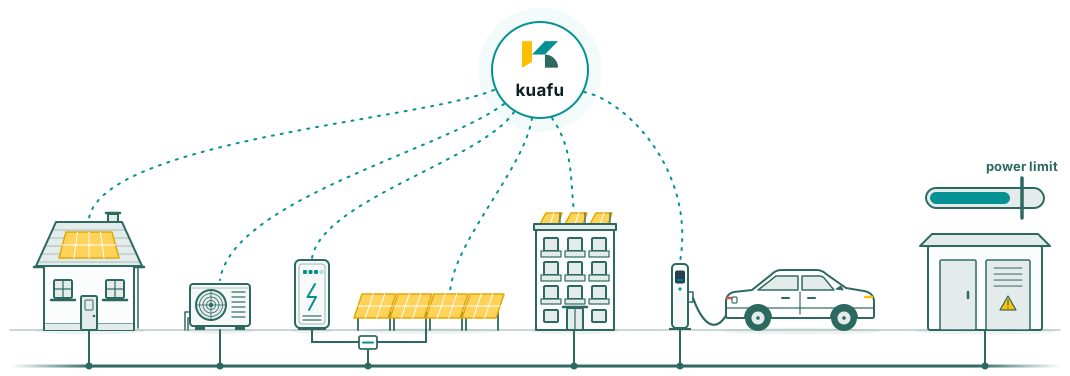
kuafu lets solar panels, batteries, electric cars and heat pumps in buildings work with the power grid. This can lower costs and CO₂.
Supported by














More solar panels, electric cars and heat pumps. The same grid
Buildings are switching to electric heating and charging. When many devices run at the same time, the local grid reaches its limits, and upgrades are slow and expensive.
kuafu orchestrates these devices so that they run at better times: when there is plenty of solar power, when electricity is cheaper, or when the grid has room.
Who kuafu works for
Building owners
Lower energy costs and less CO₂ from the devices you already own.
kuafu for building ownersEMS providers
New income from grid services and smarter energy management for your customers.
kuafu for EMS providersGrid operators
Use the flexibility of buildings to postpone or avoid costly grid reinforcement.
kuafu for grid operatorsHow kuafu works
- 1
Connect
kuafu connects through the energy management system that already runs in the building.
- 2
Learn
kuafu learns how each building uses energy, and how much it can shift.
- 3
Orchestrate
Devices run when solar power is plentiful, prices are lower, or the grid has room.



See what your flexibility is worth
Tell us about your portfolio or grid area. We reply by email and show how kuafu fits.